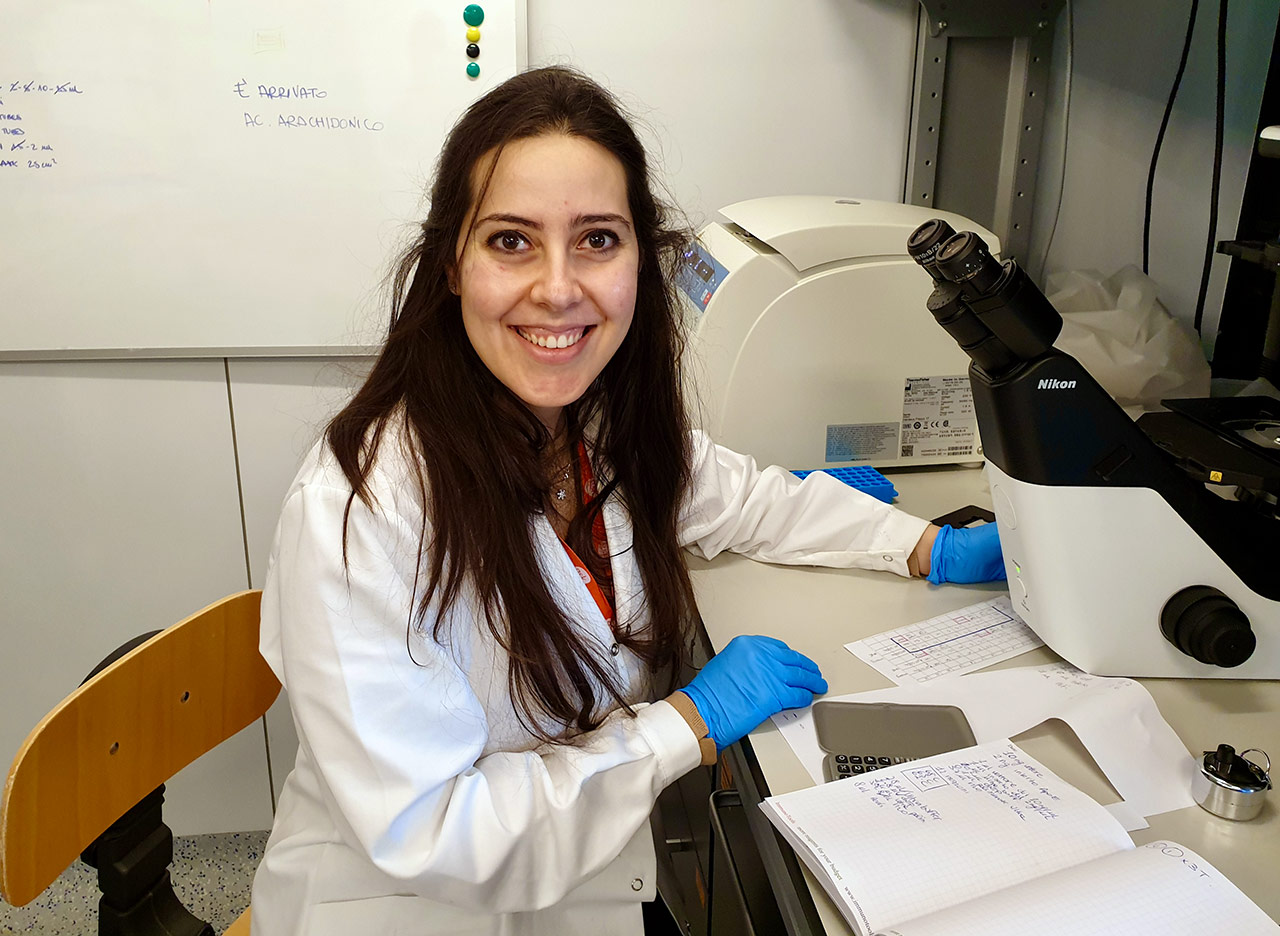



Federica Nardi
Federica Nardi obtained her Master’s degree in Molecular and Cellular Biology in 2014 from the University of Siena. In 2018, she earned her PhD in Biochemistry and Molecular Biology under the supervision of Professor Maurizio Orlandini. Her research focused on the characterization of proteins involved in angiogenesis, with particular emphasis on the surface glycoprotein CD93. Before completing her PhD, she worked as a visiting researcher in the laboratory of Professor Dario Neri at Philochem, where she used phage display technology to select antibodies against tumor-associated antigens. Following her PhD, she joined the National Cancer Institute in Aviano, where she investigated the mechanisms underlying the development and progression of gastrointestinal stromal tumors. During this time, she gained expertise in RNA-seq and data analysis.She subsequently worked as a postdoctoral researcher at the University of Modena and Reggio Emilia on a project focused on characterizing mutations involved in retinitis pigmentosa, a genetic retinal disorder leading to progressive vision loss. In 2020, Federica joined the “Molecular Oncology and Translational Immunology” laboratory, led by Dr. Anna Kabanova, at Toscana Life Sciences (TLS), where she investigates the molecular mechanisms underlying chronic lymphocytic leukemia (CLL) and aims to identify novel therapeutic targets.At TLS, she has contributed to projects funded by the Italian Association for Cancer Research (AIRC) and the HEAL ITALIA consortium, participating in the development of methods for engineering primary CLL B cells (Nardi et al., European Journal of Immunology, 2022) and in the identification of novel regulatory pathways promoting ferroptosis in CLL cells (Nardi et al., Leukemia, 2024). Currently, her research focuses on the role of metal homeostasis and metabolism in CLL, as well as on the characterization of genes involved in the regulation of energy metabolism, survival, and proliferation of leukemic B cells.